Wedding Guest Book With Video From Every Guest
Stories AR team
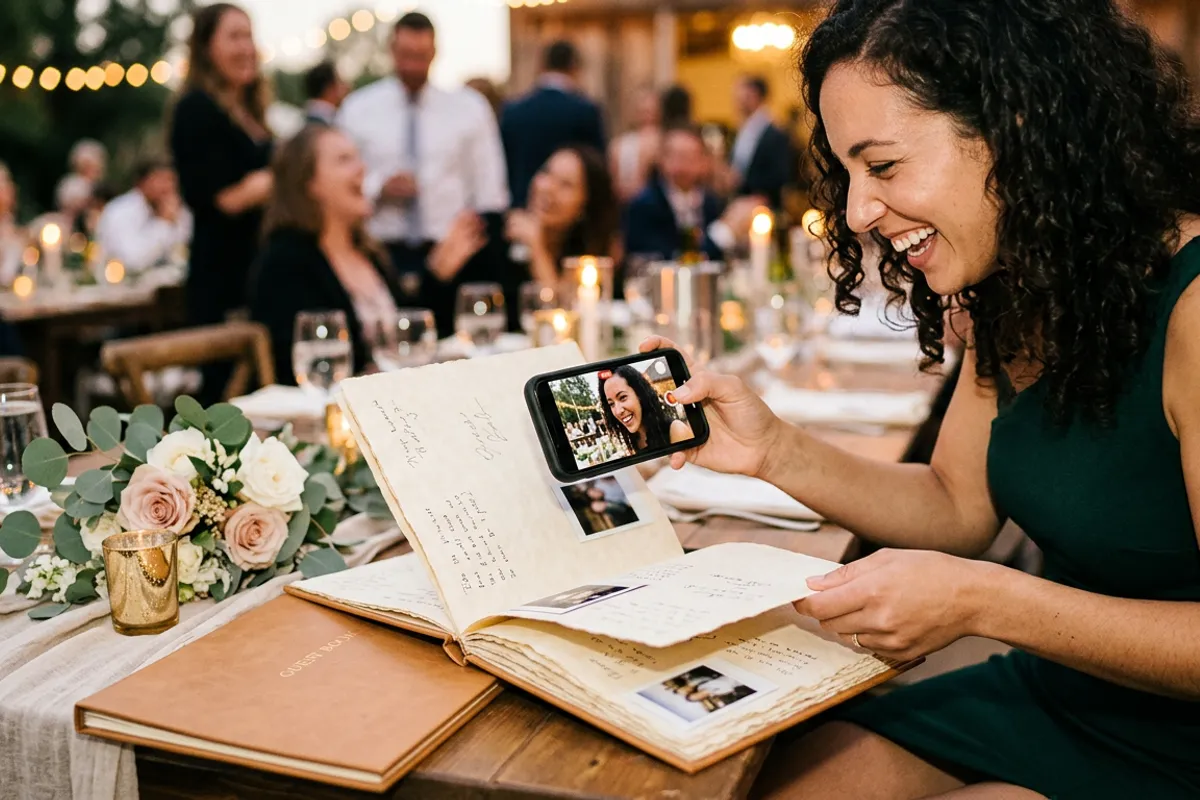
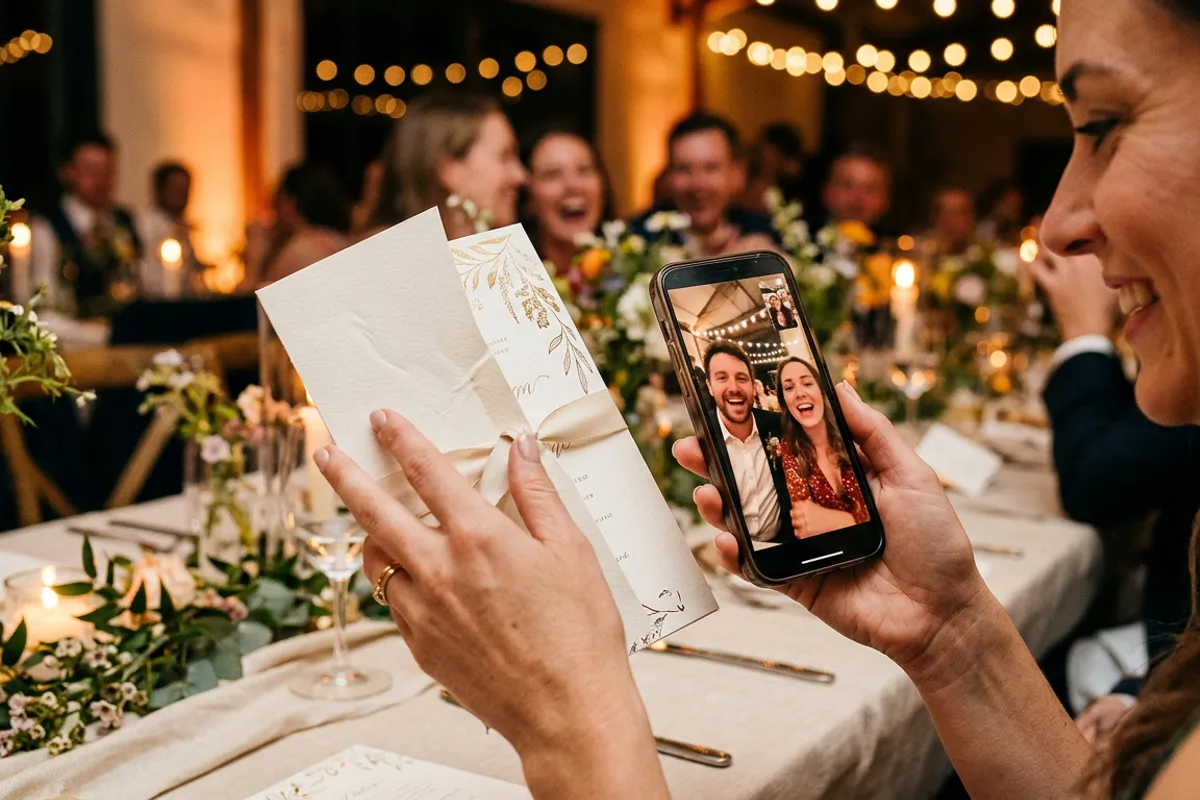
A classic guest book gets signed once and opened almost never. An AR guest book is different: each guest is photographed at the wedding, records a short video wish, and their printed photo plays that wish whenever the couple points a phone at it. The same mechanic turns thank-you cards into small gifts — a card with a photo from the wedding that plays a clip from the day. Here is how photographers set both up with WebAR.
Quick answer
An AR wedding guest book pairs each guest's printed photo with a short video wish they record at the reception. The couple scans a QR code, points the camera at any page, and the guest appears and speaks in the browser — no app needed. Thank-you cards work the same way: one printed photo plays a chosen clip from the wedding. Both are built in the Stories AR dashboard by uploading photo + video pairs.
Key takeaways
- Each guest book page is one photo + one video wish, paired in the dashboard in about two minutes.
- Guests record wishes at the reception; you can add or replace videos after the wedding without reprinting a single page.
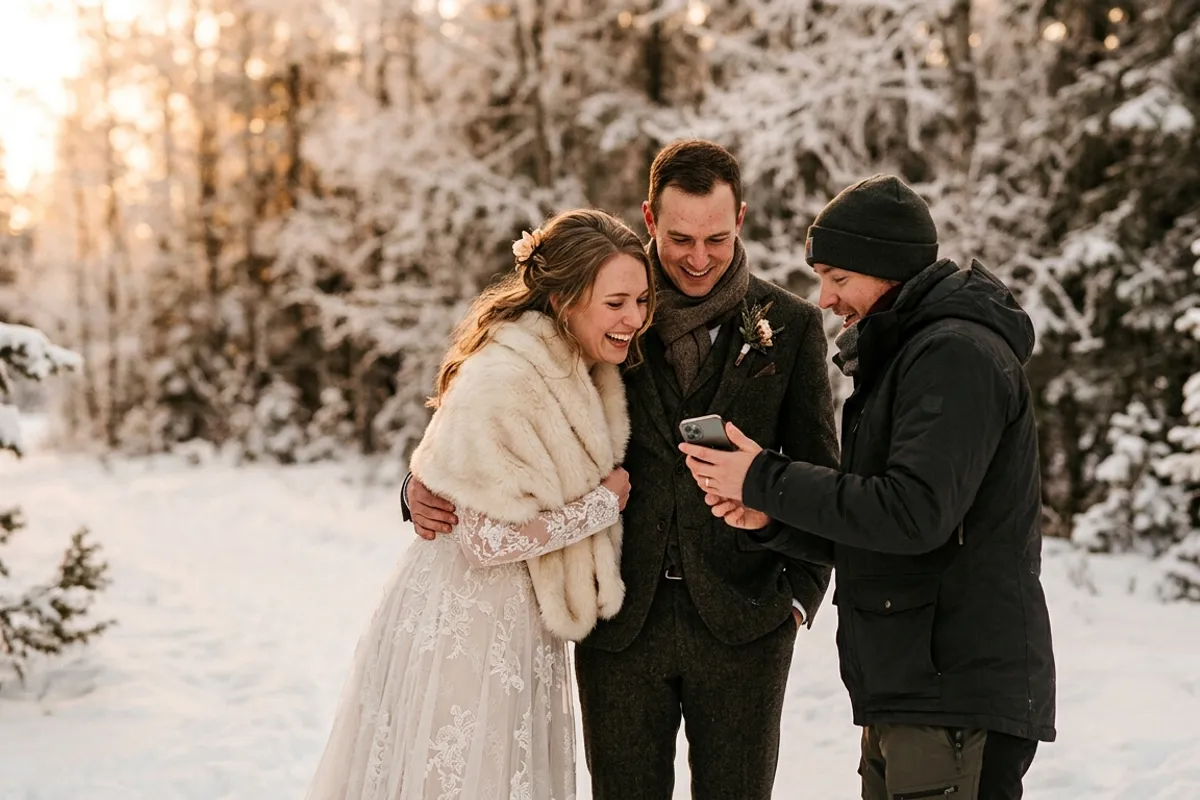
- Thank-you cards reuse wedding footage: a printed photo of the couple with each guest plays a clip from the day.
- Everything plays in Safari or Chrome via QR code — grandparents don't have to install anything.
- Photographers sell the AR guest book as a separate line item on top of the standard wedding package.
Why a guest book is the perfect AR product
The general case for living photos at weddings — albums and wall prints that play film clips — is well known. A guest book is a narrower and, in some ways, stronger product: it captures the one thing a wedding film usually misses. The film shows the couple. The guest book preserves everyone else — the toast your college friend improvised, your grandmother's blessing, the wish your colleagues recorded together.
It is also naturally structured for AR. Every page is a self-contained pair: one person (or one table), one photo, one message. There is no editing puzzle, no storyline to cut. That makes production fast even for a wedding with 80–100 guests.
And it ages well. A signature fades into 'who was this?' within a decade. A 20-second video of that person laughing and talking does not.
The workflow on the wedding day
The setup is simple: a photo corner and a video corner, or one assistant doing both. Each guest (or couple, or table) gets a portrait — this becomes the printed page. Right after, they record a 15–30 second wish on any phone. Keep the framing similar to the portrait so the transition from print to video feels seamless.
Practical tips from print production: shoot portraits against a detailed or textured backdrop rather than a flat white wall — WebAR tracking locks onto detail, and faces plus texture make a reliable trigger. Avoid glossy lamination on the finished book for the same reason.
If some guests are shy on camera, that is fine. A page can play any video: a clip of that table dancing, a toast filmed from the crowd, or a group cheer. The pairing is up to you.
Assembling the book after the wedding
In the Stories AR dashboard you upload each photo + video pair; batch upload handles a full guest list in one session. Each pair gets a permanent link, and the whole book is served through one QR code printed on the cover or the first page.
The couple's experience: scan the QR once, the browser opens the camera, and from then on they just leaf through the book pointing the phone at pages. Each portrait comes alive with that guest's voice. It works in Safari on iOS and Chrome on Android with no app install — which matters when the book is passed around a family table.
Because links are permanent, the book stays editable. A guest who missed the wedding can send a video wish a week later, and you attach it to their photo without touching the printed book. The production logic is the same as for an AR photo album, just with more, shorter videos.
Thank-you cards that play the wedding
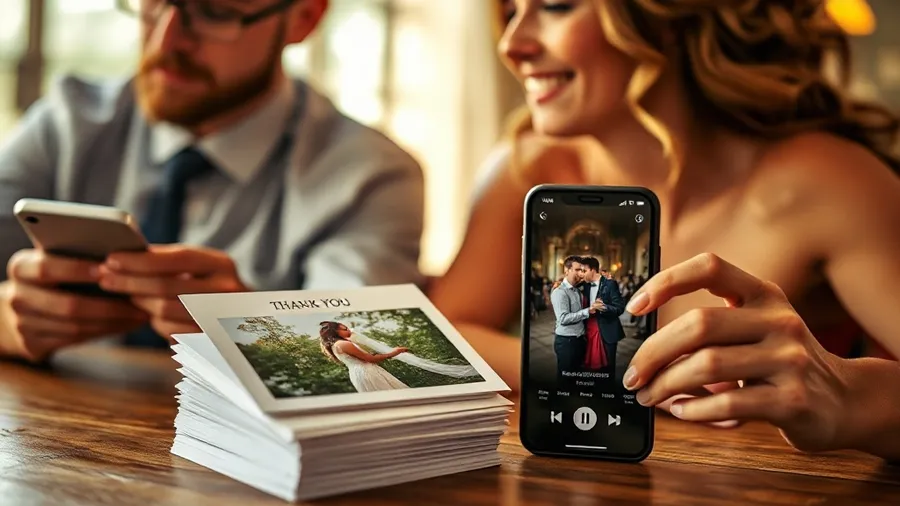
Thank-you cards are the mirror image of the guest book: instead of guests giving the couple videos, the couple gives each guest a moment back. A printed card with a photo — the couple with that guest, or a favorite frame from the day — plays a short clip: the first dance, the toast that guest gave, a 20-second personal thank-you recorded by the newlyweds.
Production is light because the footage already exists. You are pairing prints with clips the videographer already shot. Even a generic version — the same highlight clip behind every card — turns a courtesy card into something people actually keep on the fridge.
Cards can be business-card size and still track reliably; Stories AR triggers work from business-card size up to posters.
What it costs and how to price it
On the platform side: the first AR photos are free, and the PRO plan at $24/month billed yearly includes 20 AR photos per month — enough to build a guest book across one or two billing months, or you scale the plan for a large guest list. More than 62 000 photographers already use the platform, so the workflow is well trodden.
On the sales side, photographers position the AR guest book as a premium add-on to the wedding package: you are selling the print cost plus the capture work at the reception plus the pairing work. Thank-you cards price per unit like premium stationery. Because the video can be replaced anytime, you can also offer an 'anniversary refresh' — new videos behind the same book a year later.
Build your first AR guest book
Sign up at pro.stories-ar.com, upload a photo and a video wish, and get a working QR code in minutes. First AR photos are free.
Start for freeFrequently asked questions
Do guests or the couple need to install an app?+
No. The QR code opens the camera in the phone browser — Safari on iOS, Chrome on Android — and the photos play right there.
What if a guest didn't record a wish at the wedding?+
They can send a video later. You attach it to their printed photo in the dashboard — the QR code and the printed book don't change.
How long should each video wish be?+
15–30 seconds works best: long enough to say something real, short enough to keep leafing through the book fun.
Can thank-you cards each play a different video?+
Yes. Each card is its own photo + video pair, so one guest's card can play their toast while another's plays the first dance.