Graduation Album Trends 2027: Update Your Offer
Stories AR team

Schools and parent committees pick their graduation photographer early — in many markets the shortlisting happens in January and February, months before the actual shoots. That makes November and December your window to rebuild the product, not just the price list. This guide covers what buyers actually ask for going into the 2027 season, why AR pages have become the clearest differentiator, and how to restructure your album offer so it wins on product rather than discount.
Quick answer
For the 2027 season, graduation album buyers want three things: candid documentary pages instead of staged clichés, video woven into the printed album, and content that stays current. AR pages answer all three — printed spreads play video (the last bell, the waltz, teachers' messages) when scanned in a phone browser, and the video behind a page can be updated after printing. Photographers who show a scannable sample spread in January meetings stand out immediately.
Key takeaways
- Selection season starts in January–February, so November–December is when you rebuild the album offer, print samples and update your pitch.
- The strongest 2027 trend: video inside the printed album — AR pages that play the last bell, the waltz or teachers' greetings via the phone browser, no app.
- Parents increasingly ask for candid, documentary-style pages; AR clips amplify exactly that material.
- Offer tiers: classic album, album + AR pages, full living album — let the committee choose the depth rather than yes/no.
- AR videos are replaceable after printing, so the album can be finished on time even if some footage arrives late.
Why update the offer now, not in spring
Graduation albums are bought long before they are shot. Parent committees compare photographers at the start of the calendar year, sign in late winter, and the shoots stretch through spring. By the time most photographers think about "this season's product", the contracts are gone.
That timeline dictates the work plan: in November you decide what the 2027 album is, in December you produce sample spreads and update the graduation album page of your portfolio, and in January you walk into meetings with something committees have not seen from the three other candidates.
What buyers ask for going into 2027
Requests have shifted away from the classic staged formula. What comes up in briefs now:
- Documentary pages: real hallway life, rehearsals, friendships — not only rows of portraits on a studio background.
- Video as part of the product: parents know the waltz and the last bell exist as clips and ask where they live; "in a chat somewhere" is not an answer they like.
- Individual value per child: each graduate's pages should feel personal, not a template with a swapped face.
- Longevity: an album that stays interesting in ten years, which favors real moments and voices over decorative graphics.
- A clear per-child price with no surprise add-ons late in the process.

AR pages: the differentiator that demos itself
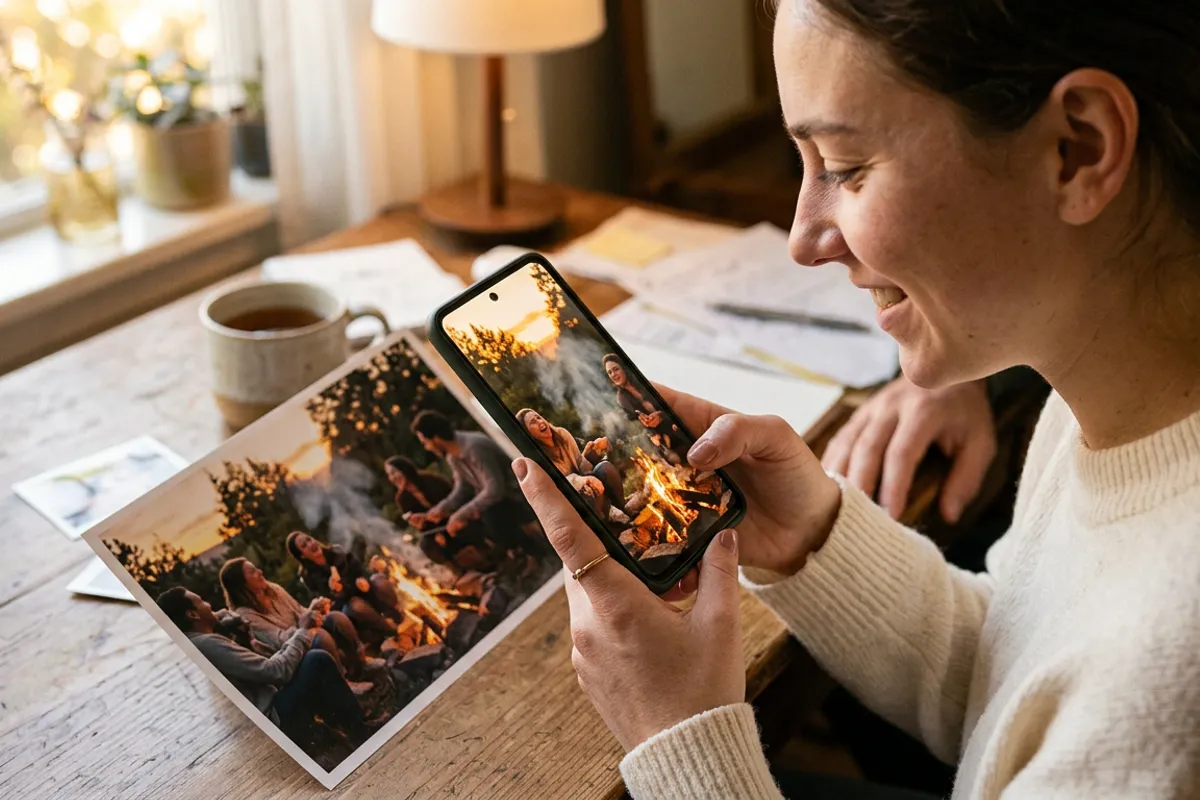
An AR page is a printed spread paired with a video. A parent scans a QR code once, points the phone at the page — and the printed photo plays: the graduation waltz over the waltz spread, the last bell over the ceremony page, a class teacher's message over the teacher's portrait. It runs in Safari or Chrome, no app to install, which matters when the viewers are grandparents.
For the January pitch this is a gift: instead of describing innovation, you hand the committee one sample spread and let them scan it. The AR photo book format demos itself in ten seconds. More than 62 000 photographers already work with Stories AR, and 259 000+ AR photos have been created — the mechanics are proven, not experimental.
There is also a production safety valve unique to AR: the video behind a printed page can be replaced at any time. If the ceremony footage is delayed, you print on schedule and attach the final clip later — the QR on the page never changes.
How to structure the 2027 offer
Do not sell AR as a yes/no gamble; sell depth. A three-tier structure works: the classic printed album as the base; the middle tier adds 3–5 AR pages on the emotional peaks (waltz, last bell, class video greeting); the top tier is a living album where each graduate also gets a personal AR portrait page with their own clip.
Price the tiers so the middle one is the obvious choice — the AR production cost is modest. Shooting adds 10–20 second clips next to stills you already take; pairing photo and video at pro.stories-ar.com takes minutes per page. On the PRO plan at $24/month billed yearly you get 20 AR photos per month, and the free tier covers your first sample spreads for the pitch.
Your November–December checklist
Concrete prep steps while competitors sleep on the season:
- Design one sample AR spread from last season's material and print it — this is your meeting demo.
- Rewrite the offer into three tiers with per-child prices and put the AR tier in the middle.
- Update portfolio pages and social profiles with a short screen recording of a page being scanned.
- Prepare a one-page leave-behind for committees: what parents get, how scanning works, what changes after printing.
- Test your print lab's paper and lamination as AR triggers — detailed photos work, heavy gloss and flat graphics do not.
Build your 2027 sample spread
Pair one graduation photo with a clip and print a scannable demo page before selection season. First AR photos are free.
Start for freeFrequently asked questions
Do parents and grandparents need an app to watch the album pages?+
No. They scan a QR code, the phone browser opens the camera, and the printed page plays its video. Works in Safari on iOS and Chrome on Android.
What if the graduation footage isn't ready when the album goes to print?+
Print on schedule. The QR code is permanent, so you attach or replace the video later — every printed album picks up the final clip automatically.
How many AR pages should an album have?+
Three to five on the emotional peaks is the sweet spot for the middle tier: the waltz, the last bell, a teachers' or class greeting. The top tier adds a personal AR portrait per graduate.
Does this work for both school and university albums?+
Yes — the mechanics are identical. Any detailed printed photo can be a trigger, from a pocket album to a large-format group spread.