School Graduation Album Photography: Win the Contract
Stories AR team
A school graduation album is one of the best contracts in local photography: dozens of families, one decision, repeat business every year. But most photographers pitch it with a price list — and price lists all look the same. This guide walks through the season: when schools actually choose a photographer, who makes the call, what wins the pitch, and how to deliver an album where every page plays a video.
Quick answer
Schools pick their graduation photographer in the fall, months before spring graduation, and the decision is usually made by the parent committee — not the school office. The strongest pitch is a working demo: hand over a printed page that plays a video when a phone camera points at it. Deliver on a timeline that leaves 4–6 weeks for layout, printing and AR setup.
Key takeaways
- The buying window is fall: parent committees compare photographers long before spring graduation.
- Pitch the parent committee, not the principal — parents pay and parents choose.
- A living album demo in a parent's hands beats any price list or portfolio link.
- Plan backwards from graduation: shooting, layout, print and AR setup need 4–6 weeks of buffer.
- The QR code and link never change, so you can update videos even after albums are delivered.
When schools decide — and why fall is your season
Spring graduation is decided in the fall. Parent committees form early in the school year, set the budget and start comparing photographers while the weather is still warm. By January the contract is usually signed; a photographer who shows up in March is competing for leftovers.
That makes September–November your outreach window. You are not selling an album yet — you are selling a decision: put this on the committee agenda, look at a sample, agree on a date.
One school contract compounds. A graduation album done well in one class travels by word of mouth to parallel classes and neighboring schools the next fall — with zero ad spend.
Whom to pitch: the parent committee
The school administration rarely pays for albums — parents do, through the parent committee. That committee is your buyer: usually two or three active parents who collect money, compare offers and answer to everyone else.
Reach them through what already exists: parents you have shot before, the class group chat, a short message asking who handles the graduation album this year. A warm intro from one parent beats a cold email to the school office every time.
Committees choose defensively — they need an option that no other parent will criticize. Your pitch should make their job easy: a clear package, a firm timeline, and something the other photographers on the shortlist do not have.

What wins the pitch: a living album demo
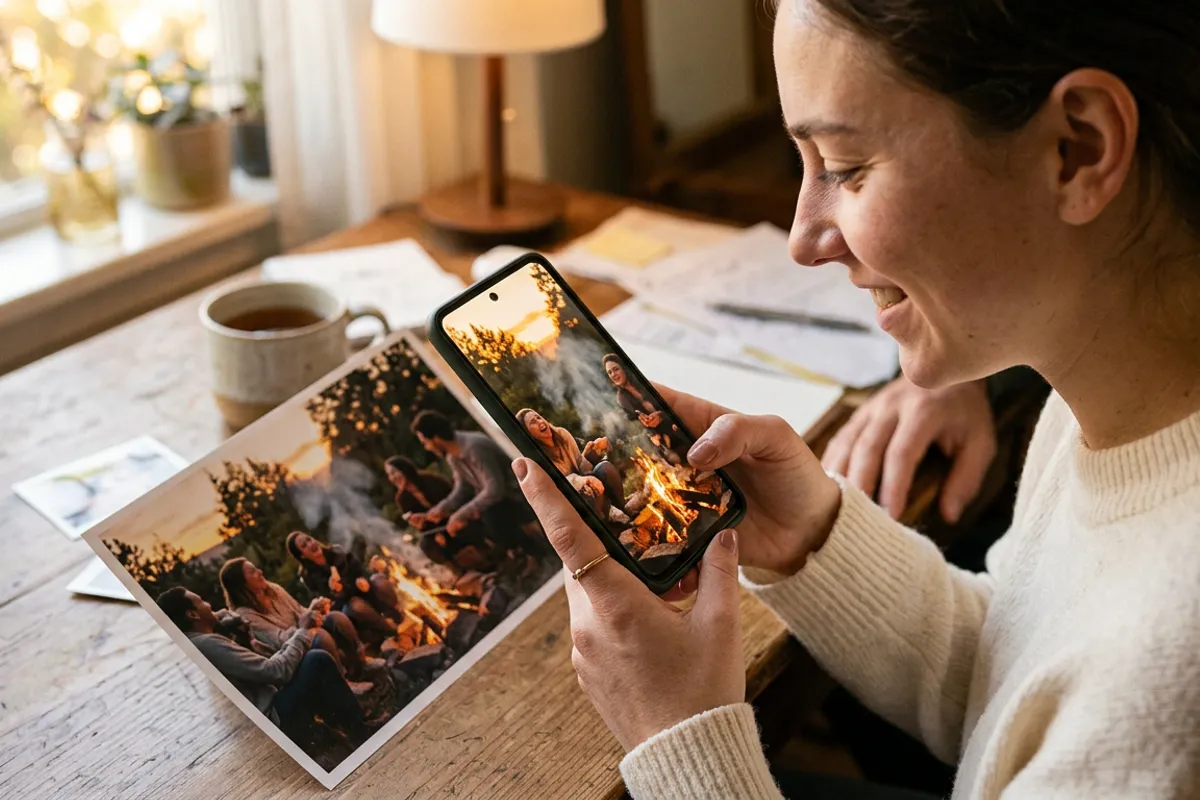
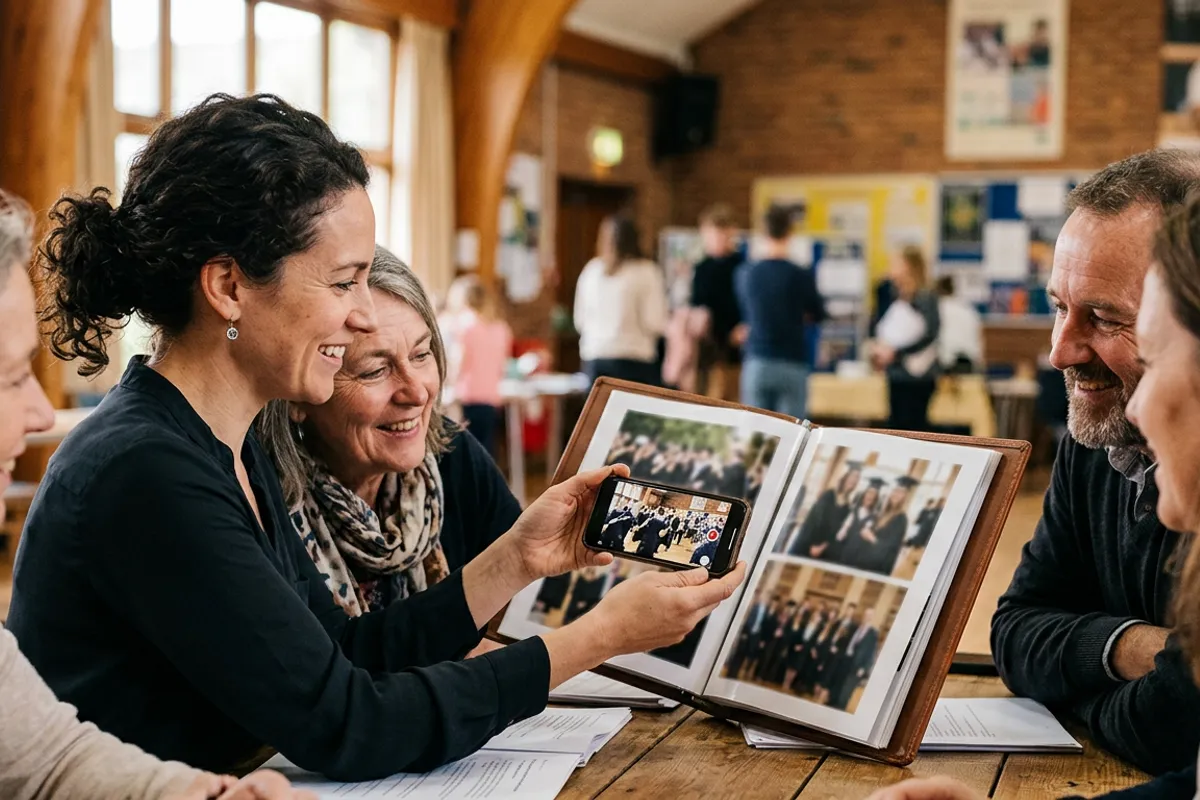
Every photographer on the shortlist brings a portfolio and a price list. Bring a printed page that comes alive. Hand a committee parent a sample album page, ask them to point their phone camera at it, and let the photo start playing video — the kids waving, the class laughing. That moment closes contracts.
Making the demo takes minutes: upload a photo and a matching video to Stories AR, get a QR code, print the page. Your first AR photos are free, so the demo costs you one print. If you cannot meet in person, send the committee the live demo page — it works from a screen too.
The living pages also justify a premium price. You are no longer comparing prints against prints; you are offering an AR graduation album that no plain album can match.
Production timeline: plan backwards from graduation
Work back from the graduation date. Album handover: one week before the ceremony. Printing: two to three weeks before that, depending on your lab. Layout approval by the committee: a week before print. That puts your final shooting day at least six weeks out from graduation.
Shoot the video material on the same days as the stills — short clips of each student, the class together, teachers saying a few words. A 10–60 second clip per page is the sweet spot: fast to load, loops well.
Build in one committee review round, not three. Show a draft layout with one working AR page so parents approve the concept and the layout in a single pass.
Delivering an album where every page plays
Pair each album page with its video in the Stories AR dashboard — batch upload handles a whole album at once. Each page gets its own AR link; one QR code on the cover or flyleaf is enough for parents to discover the rest, since every printed page itself is the trigger. How pages and videos pair up is the same flow as any AR photo book.
Test before the print run: scan from a proof print and from a screen, on iPhone Safari and Android Chrome. Parents will use whatever phone they have.
The part parents remember: the album keeps living. The QR codes and links never change, so you can swap or add videos after delivery — a graduation-day clip added a week later makes every album in every home instantly richer. More than 62 000 photographers already use the platform, and PRO at $24/month billed yearly covers 20 AR photos a month — a whole album season.
“Every photographer on the shortlist brings a price list. Bring a printed page that comes alive — that moment closes contracts.”
— Stories AR team
Build your pitch demo tonight
Upload one photo and one video — your first AR photos are free. Print the page, bring it to the parent committee, and let them scan.
Start for freeFrequently asked questions
When should I start pitching schools for graduation albums?+
In the fall — September to November. Parent committees form early in the school year and usually sign the photographer by January for spring graduation.
Do parents need a special app to watch the album videos?+
No. The album pages play in the phone browser — Safari on iOS, Chrome on Android. Parents scan a QR code once and then just point the camera at any page.
How much extra time does the AR part add to production?+
Very little. Shooting short clips happens on the same days as the stills, and pairing photos with videos in the dashboard takes about two minutes per page, less with batch upload.
Can I change a video after the albums are delivered?+
Yes. The QR code and link stay the same forever — replace the video in the dashboard and every printed album immediately plays the new one.